The sessions at Manor Farm have again been targeted on gathering data for the House Sparrow RAS project. The RAS season started on the 1st March and so the aim was to get as many retraps as possible. The season started well and with 16 new birds ringed and 15 birds either sighted or retrapped. The usual species were also ringed including Wren, Dunnock, Robin and Blue, Great and Long-tailed Tit.
A species that is grossly underestimated by many is the Common Starling, a striking species in the field but truly stunning in the hand. The pale tips contrast strikingly with the metallic violet and green sheen to the main part of the feathers. In the summer months the bill becomes bright yellow, except for the base that is, which turns blue in a male and pink in a female. The image of the male below illustrates this perfectly.
 |
| Male Common Starling - Manor Farm Country Park (Rob Skinner) |
Six new Redwing have brought the total this year to 20 and another Fieldfare was the second of the year. According to the pattern on the head feathers, which showed very little black other than along the shaft, this bird appeared to be a female.
 |
| Presumed Female Fieldfare - Manor Farm Country Park (Rob Skinner) |
The session at Botley Wood was more about cutting in net rides in preparation for the arrival of spring migrants, particularly Common Nightingales, but we still put a couple of nets up just in case. Surprisingly there were no spring migrants around not even the odd Chiffchaff, but two Eurasian Woodcocks, a Siskin and a Kingfisher made the visit worthwhile. In contrast to the ringing which resulted in two each of Blue Tit, Wren and Robin, so not really with the effort.
The warm spring days have seen the level of invertebrate activity increase dramatically, Brimstones were abundant at Botley Wood and when I returned home there were Small Tortoiseshell's and Red Admirals in the garden.
 |
| Underwing of Small Tortoiseshell |
 |
| Upperwing of Small Tortoiseshell |
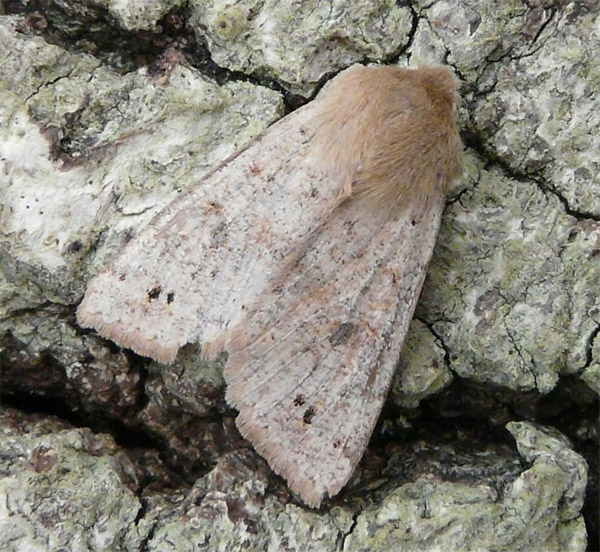
Moth numbers have also increased as has the diversity of species and in just three session 15 species have been recorded in my garden. The species list has produced nothing as good as the recent Acleris literana recorded at work but has included Small Brindled Beauty, Clouded Drab and Twin-spotted Quaker.
 |
| Twin-Spotted Quaker |
Twin-spotted Quaker is common and widespread throughout Hampshire and the Isle of Wight with the peak month for its emergence being March. The other species recorded included Early Moth, Early Grey, Hebrew Character, Early Grey, Diurnea fagella and the Common Plume Moth Emmelina monodactyla.